Ask someone in Malaysia where to get good roti canai near KLCC, and there’s a decent chance a specific mamak name slips out before they’ve even finished the sentence — not because you asked for a recommendation, but because that name and “roti canai” have fused together in their head. That’s brand visibility doing its job quietly, with no ranking, no dashboard, and no ad spend in sight. Now flip the question to your own retail business. If a customer describes exactly what you sell — the product, the price range, the location — does your name surface on its own, or do you have to be searched for on purpose?
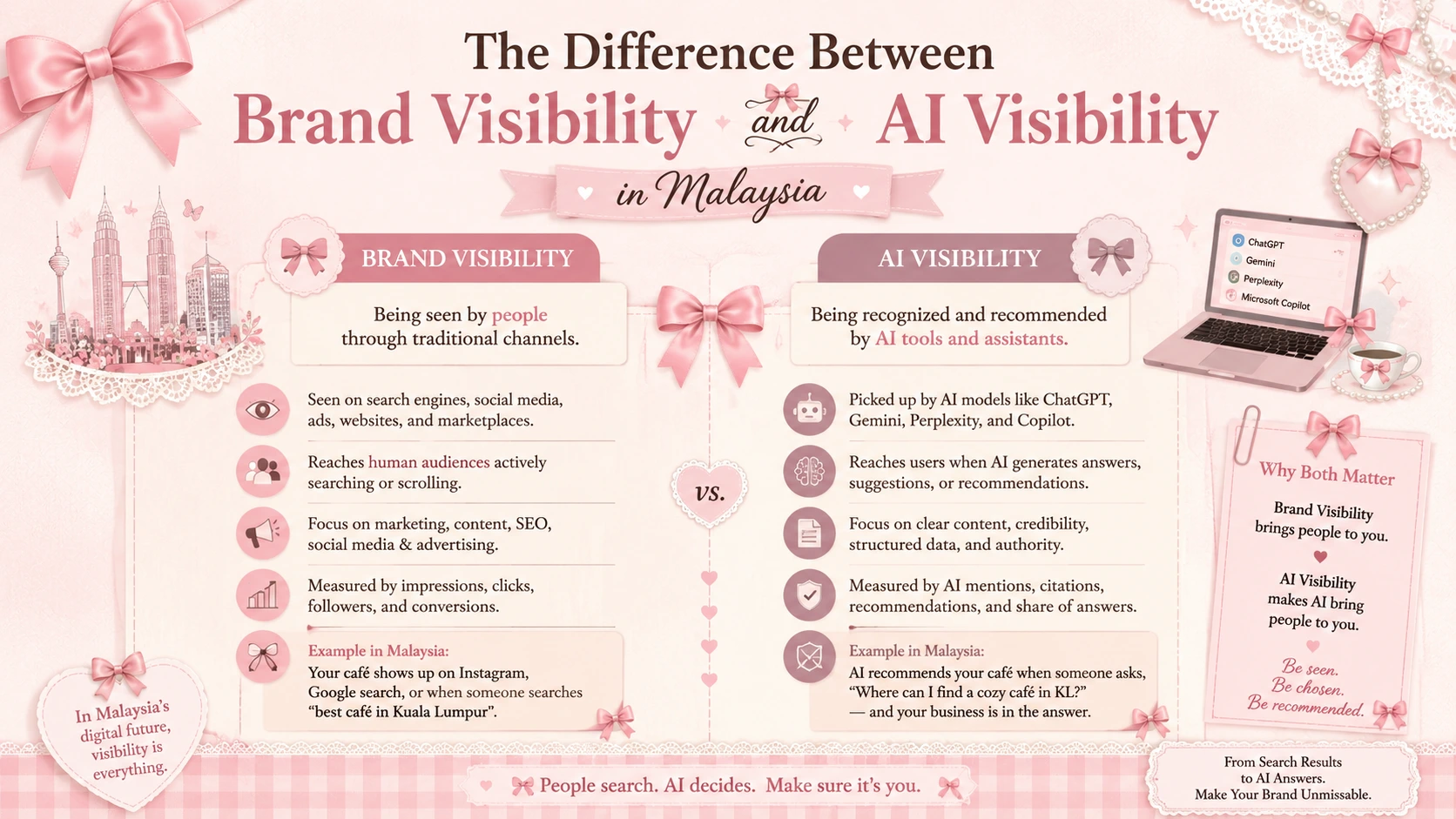
That gap between being findable and being unavoidable is what brand visibility actually measures. It isn’t a number on a dashboard or a position in a search result — it’s how deeply your name has penetrated the way people talk, think, and shop within your category, built through popularity, word of mouth, media coverage, and consistent presence across the platforms your customers actually use. Once you separate brand visibility from AI visibility — the measurable layer built on top of it — both ideas start making a lot more sense, along with the different kind of work each one actually needs.

Brand visibility isn’t built on a dashboard — it’s built in conversations like these.
Brand Visibility Is Popularity and Market Penetration
It’s Popularity and Market Penetration
Brand visibility is the degree to which a brand’s name has become part of the everyday language people use to describe a category, whether or not that name is being searched for at that moment. This is the “Apple” effect — a name so deeply attached to a product category that it surfaces automatically, without anyone prompting it. For a premium or established retail brand in Malaysia, this is usually already understood at some level — the brand story, the positioning, the reason customers reach for that name first. This is also the exact confusion many retail marketing managers in Malaysia run into when a boss asks for “more visibility” without agreeing on which kind is actually meant. Brand visibility is the measure of how far that penetration has actually spread beyond the customers who already know and love the brand.
This is the “Apple” effect — the final stage of real market penetration.
AI Visibility Is the Measurable Layer Built on Top
AI Visibility Is What You Can Actually Measure
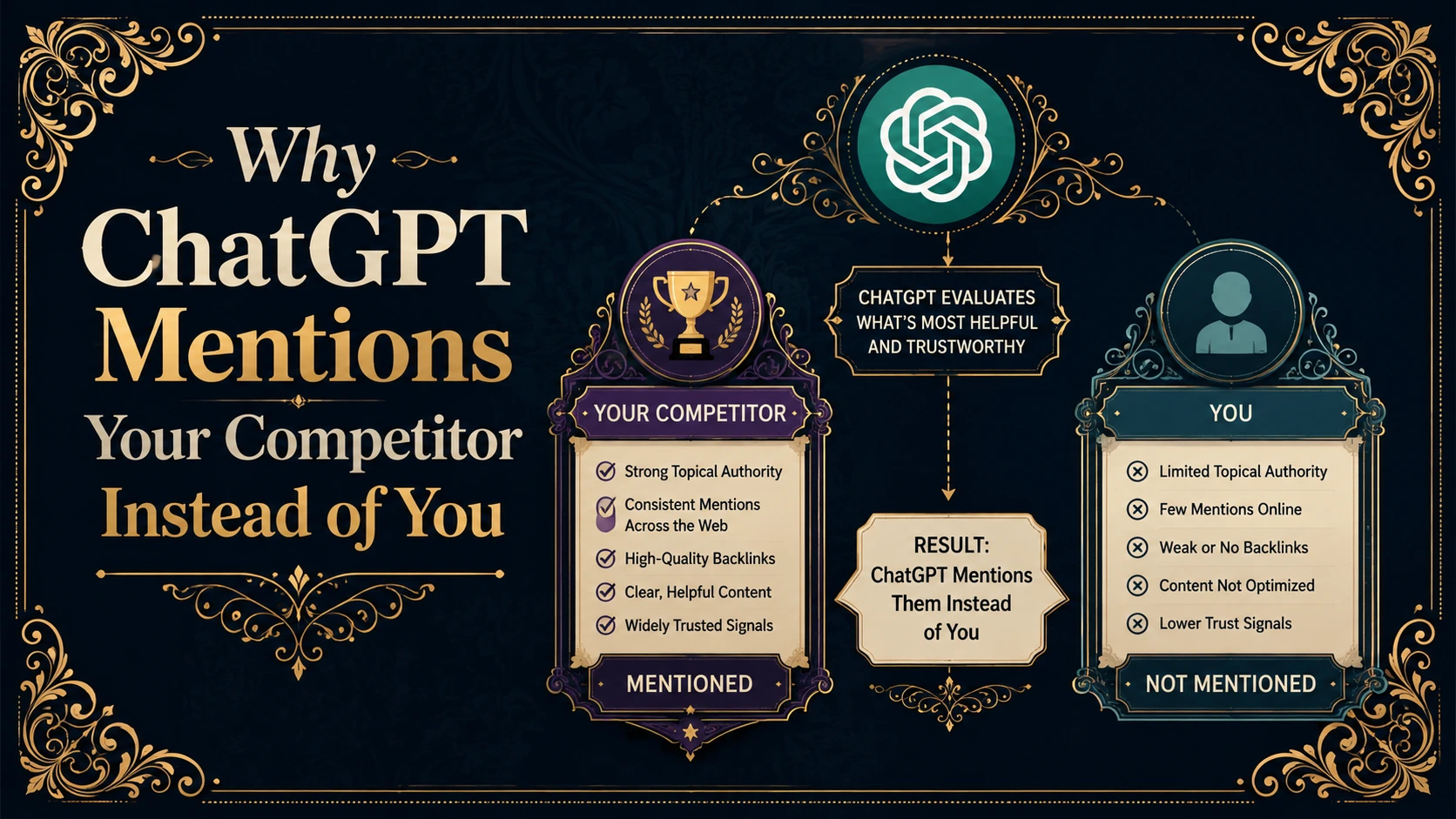
AI visibility is the layer built directly on top of brand visibility — and unlike brand visibility, it can actually be measured, through AI citations, brand mentions, and prompt coverage across AI platforms. Where brand visibility asks “does this name come up in conversation,” AI visibility asks a narrower, trackable version of that same question: does this name come up when someone asks an AI platform instead of a person? A business with strong market penetration usually has an easier time building AI visibility on top of it, because the same popularity and reach that gets a brand mentioned by people also gets it mentioned by the platforms trained on what people say. For a deeper look at how that specific layer works, see why ChatGPT mentions your competitor instead of you and what it actually means when your brand shows up in ChatGPT.
Most businesses put the bulk of their effort into channels they already manage — while the platforms that actually drive unprompted recognition sit mostly untouched.
See How Growth SEO AI Visible Works
Where Does Brand Visibility Actually Get Built for a Malaysian Retail Business?
The Places Most Businesses Get Right
Most Malaysian retail businesses already manage the basics reasonably well — a working website, some regular social media activity, and a store presence that customers can find without too much trouble. These are the visible, easy-to-check parts of brand visibility, and they matter, but they’re also the parts every competitor is doing too, which means they rarely create the kind of penetration that makes a name come up unprompted. Getting these right is necessary. It just isn’t sufficient on its own.
The Places Most Businesses Overlook
Backlinks from quality platforms, discussion spaces like Reddit, and coverage in newspapers or PR media are where most Malaysian retail businesses are actually losing ground on brand visibility. These are the third-party signals that tell the wider market a brand is being talked about by people who aren’t the brand itself — and third-party mentions carry more trust than anything a brand says about itself. A retail business can have a polished site and an active Instagram, and still be almost entirely absent from the conversations happening about its category on forums, in the press, or through independent coverage. That absence is usually where the real visibility gap lives, and closing it follows the exact order that actually works — brand foundation first, AI visibility layered on top.
Why Does Brand Visibility Matter More for Premium and Established Retail Brands?
Penetration Is the Real Marker of a Strong Brand
A brand’s strength shows up in whether its name gets used to describe an entire category, not just in whether it makes a sale. This is the same effect behind “Apple” surfacing in phone conversations — the name has penetrated so deeply that it stands in for the category itself. For a premium or established retail brand in Malaysia, this kind of penetration is the real long-term payoff of building that reputation: being the name a customer reaches for first, even before comparing options, because the brand has already become part of how they think about that category.
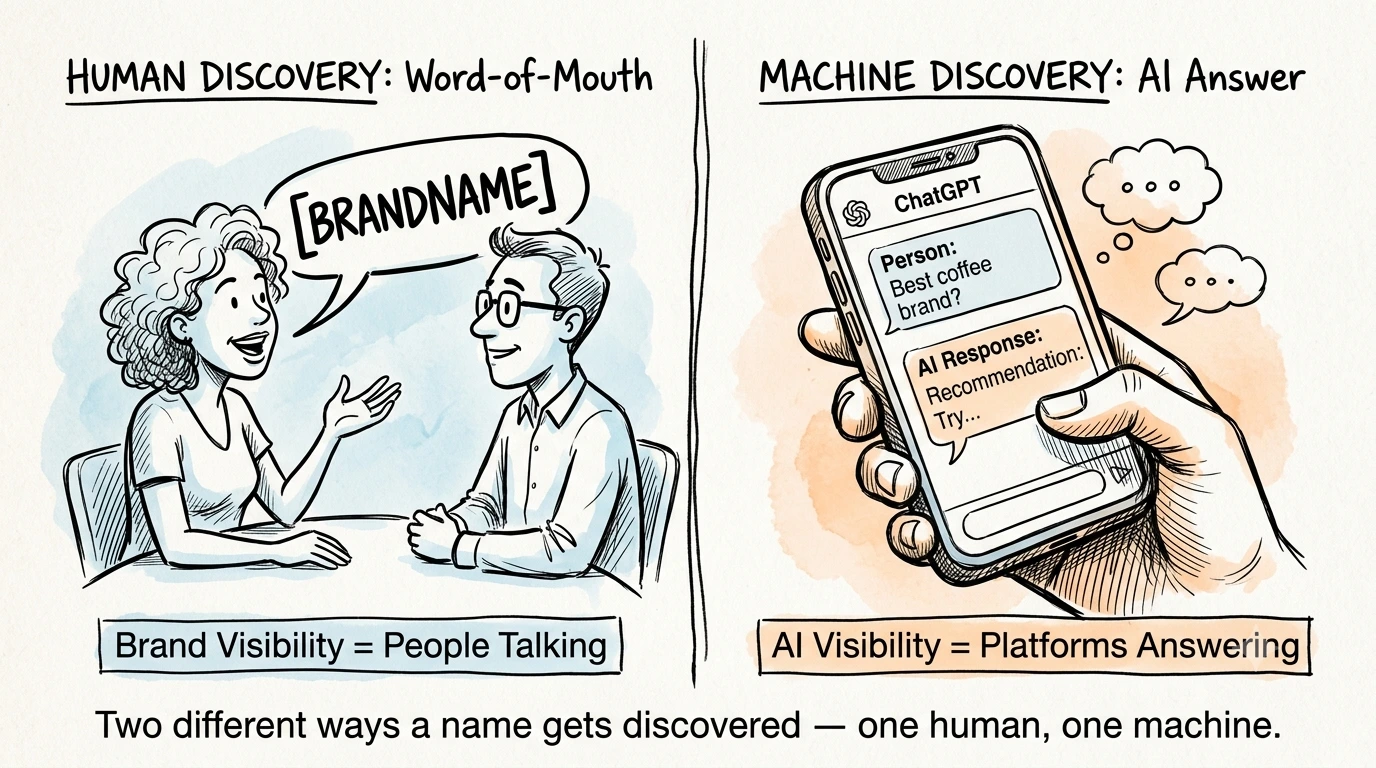
Two different ways a name gets discovered — one human, one machine.
How Do Brand Visibility and AI Visibility Work Together?
One Feeds the Other
Brand visibility and AI visibility reinforce each other over time rather than operating as separate, unrelated efforts. Real brand strength — built through popularity, backlinks, PR coverage, and genuine market penetration — gives AI platforms more of the third-party signal they rely on to trust and cite a business, and brand mentions correlate more strongly with AI visibility than backlinks do. In turn, consistent AI visibility keeps a brand’s name circulating in a growing number of everyday conversations, since more people now ask AI platforms the same questions they used to ask friends or search engines. Building one well makes the other easier to build — which is why treating them as two entirely separate projects usually wastes effort that could be working in both directions at once.
Where Malaysian Retail Brands Should Focus Next
Brand visibility was never meant to fit inside a single metric — it’s the sum of popularity, market penetration, and how naturally a name surfaces in conversation about a category. AI visibility is the newer, more measurable layer sitting on top of that same foundation, tracked through citations, mentions, and prompt coverage rather than guesswork. For a Malaysian retail business, building real brand visibility means paying attention to the places most competitors overlook — backlinks, discussion platforms, and PR coverage — not just the website and social channels everyone already manages. This is the exact foundation GES Growth Engine Solutions helps retail and property brands build before layering AI visibility on top.
Strengthen that foundation, and AI visibility stops being a separate project and becomes a natural extension of the reputation already being built.
Not Sure How Visible Your Brand Actually Is?
Let’s talk through where your brand stands today and what real market penetration could look like next.
Chat With Us on WhatsApp